Modern and Fine-Dining Techniques
Low temperature, foams, gels, spherification, emulsions, and other contemporary techniques explained without gimmicks.
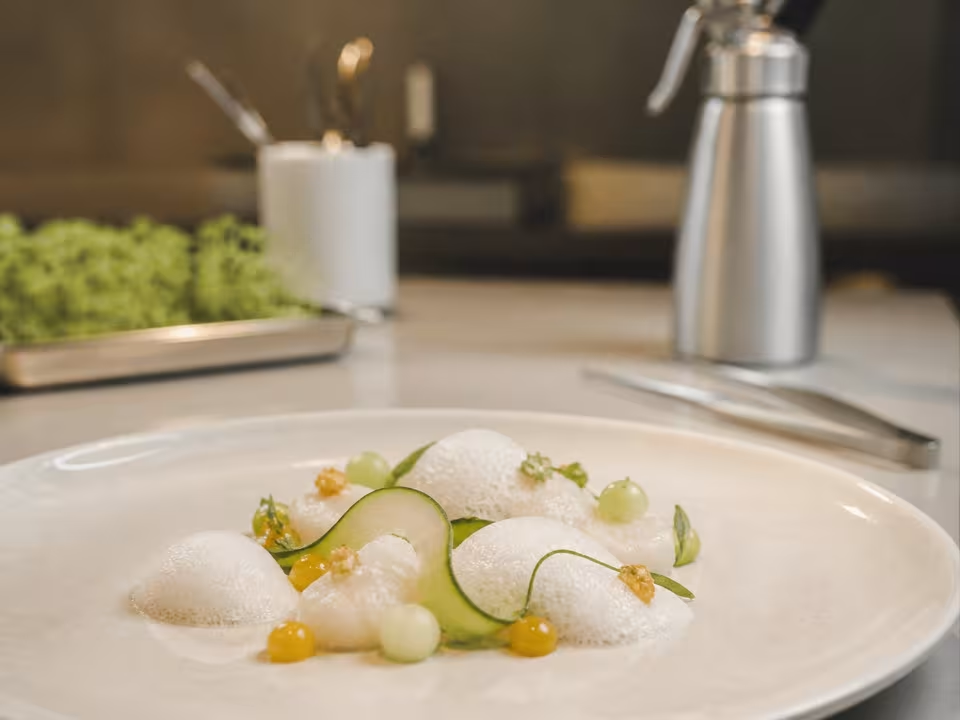
Contemporary cooking uses knowledge, precision, and new tools to control texture, temperature, and aroma. It does not complicate a dish for its own sake: a technique adds value when it improves flavor, facilitates service, or creates a consistent experience.
Precision Before Spectacle
Many modern techniques come from observed traditional processes with more detail. Working with grams, temperatures, and times allows for repeatable results. Before adding a technical resource, decide what problem it solves: juiciness, stability, lightness, contrast, or preservation.
Start with a Variable
Test the technique with a simple recipe and modify only one element at a time. Noting the ingredient brand, concentration, temperature, and time turns an experiment into reusable knowledge.
Low Temperature and Vacuum Cooking
What It Achieves
Controlled temperature reduces the difference between the exterior and the center of the food. In meats, fish, eggs, or vegetables, it allows for precise adjustment and maintains more moisture.
How It Is Used
The food is packaged in a suitable bag, cooked in a temperature-controlled bath, and, if color is desired, finished with a quick sear. Thickness is more important than weight to determine how long the center takes to heat up.
Security and Cold Chain
Vacuum cooking requires safe combinations of time and temperature. If not consumed immediately, it should be cooled rapidly and stored in the cold. Do not reuse generic tables without checking that they correspond to the food, thickness, and process used.
Foams and Whipped Cream
Light Foams
A foam distributes bubbles within a liquid or fat phase. It can be prepared with blending, lecithin, or whipped cream depending on the texture. The base must have sufficient structure to retain air.
Using the Whipped Cream
The mixture is filtered to avoid blocking the valve, introduced without exceeding the indicated capacity, and loaded following the manufacturer's instructions. Some bases need to be chilled; others remain cold in compatible equipment.
Common Errors
A too liquid mixture loses air; a too thick mixture doesn't whip well. Solid residues block the nozzle, and excessive loading or temperature can be dangerous.
Gelation and Textures
Gelatin
Produces elastic gels that melt in the warmth of the mouth. It hydrates before dissolving and loses effectiveness with excessive heat or some fresh fruits that contain enzymes.
Agar-agar
Vegetarian gelling agent that needs to be heated to activate. Forms firm gels and withstands better to moderate temperatures, although its texture is less elastic.
Pectin
Used mainly with fruit. The type of pectin determines the necessary ratio of sugar, acidity, and calcium. Not all are interchangeable.
Fluid Gels
A formed gel is whipped until it becomes a smooth sauce that maintains shape on the plate. Allows controlling points, lines, and fillings without resorting to a strong reduction.
Direct and Inverted Spherification
Direct Spherification
A liquid with alginate enters a bath with calcium and forms a membrane from outside in. Suitable for spheres served soon, as the gelation continues over time.
Inverted Spherification
Calcium is in the preparation and alginate in the bath. Allows working better with bases that already contain calcium, like some dairy products, and keeps the interior liquid for longer.
Important Variables
Acidity, presence of calcium, viscosity, resting to eliminate bubbles, and precision of concentrations change the result. Weigh additives with an appropriate scale and follow the manufacturer's dosages.
Stable Emulsions
An emulsion disperses small droplets of one liquid within another with which it normally does not mix. Mayonnaise, vinaigrette, beurre blanc, and many sauces are classic examples refined by modern cooking through temperature, droplet size, and emulsifiers.
Temporary Emulsion
A shaken vinaigrette can separate when left to rest. Preparing it just before serving is sufficient when prolonged stability is not needed.
Stable Emulsion
Yeast, mustard, dairy proteins, or lecithin help keep the droplets dispersed. Adding the fat phase progressively and controlling the temperature reduce the risk of breaking.
Drying, Crisps, and Powders
Removing water concentrates flavor and changes texture. Fruits, vegetables, peels, herbs, and purees can be converted into sheets, chips, or powders. Uniform thickness and low temperature with good circulation prevent the exterior from hardening while the interior retains moisture.
Crust or Salty Crumble
Combines dry or dehydrated ingredients to create texture. It should provide recognizable flavor and not just be decoration.
Aromatic Powders
Obtained by grinding a completely dry ingredient. Stored in airtight containers and added at the end to preserve aroma and prevent absorbing moisture.
Smoking and Aroma Capture
Smoking at Room Temperature or Finishing
Introduces aroma without significantly cooking. A brief contact is usually sufficient for butter, cheese, sauces, or finished dishes. Ventilation and food-grade material are needed.
Smoking Can
Holds aroma around the dish during service. Smoke complements, but does not replace seasoning or proper cooking.
Infusion and Distillation
Infusions extract aromatic compounds in water, fat, or alcohol. Equipment like the rotary evaporator allows distillation at low temperatures, but belongs to specialized environments and requires training.
Liquid Nitrogen and Instant Freezing
Liquid nitrogen freezes very quickly and can produce small crystals, crunchy textures, or visual effects. Its extreme temperature causes severe burns by contact and the gas displaces oxygen in poorly ventilated spaces.
Exclusively Trained and Controlled Use
Should not be touched or ingested and must completely evaporate before service. Do not add to a preparation immediately before consumption. Its storage, handling, and ventilation require specific equipment and training.
Finishing and Presentation
Intentional Contrast
Combines crunchy and creamy, hot and cold, or acidic and fatty when the contrast improves the bite. Too many elements compete with each other and make it difficult to understand the dish.
Height, Space, and Rhythm
Empty space helps read the composition. Repeat shapes or colors moderately, concentrate the main element, and check that each component can be eaten comfortably.
Sauces and Dots
Density should adapt to use: nappe, accompaniment, unification, or decoration. A sauce placed with precision still needs good flavor and sufficient quantity for the dish.
Which Techniques Are Reasonable at Home
| Technique | Domestic Equipment Possible | Level of Control |
|---|---|---|
| Low Temperature | Accurate oven or convection oven | High: time, temperature, and hygiene |
| Foams | Blender or homologated whipped cream machine | Medium: density, filtration, and temperature |
| Geles | Pot, scale, and mold | Medium: dosages and activation |
| Esferification | Accurate scale and separate baths | High: composition, pH, and concentration |
| Deshidratación | Dehydrator or appropriate oven | Medium: thickness, air, and complete drying |
| liquid nitrogen | Specific professional equipment | Specialized: not recommended without training |