Preservation Methods
Cold, heat, salt, sugar, acidity, fermentation, and drying explained with practical safety food preservation criteria.
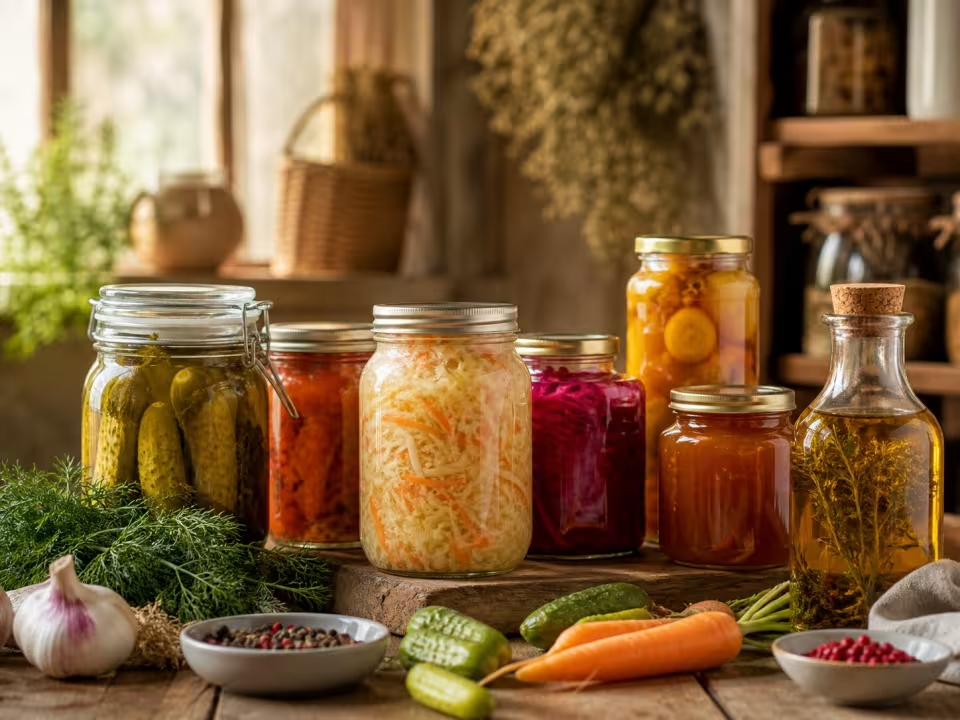
Preserving food means slowing down and stopping the reactions and microbial growth that deteriorate it. No domestic method turns food into indefinite preservation: the raw ingredients, hygiene, process, packaging, and storage temperature form a single system.
What Controls Preservation
Microorganisms need favorable conditions to grow. Preservation methods act by reducing temperature, removing available water, increasing acidity, applying heat, or creating an environment that is less favorable. Often, multiple barriers are combined.
Safe Preservation, Proven Recipes
In home canning, it's not advisable to improvise proportions, times, or processes. Acidity and type of food determine if a water bath is sufficient or if pressure treatment is needed. Always use validated procedures.
Preservation by Cold
Refrigeration
Slows microbial growth, but does not stop it completely. Store raw and cooked foods separately, use sealed containers, respect the date and instructions on the packaging, and place what should be consumed first in front.
Freezing
Stops the growth of many microorganisms while maintaining cold, but does not eliminate them. Freeze in portions, label with content and date, protect from air, and avoid repeated temperature changes.
Thawing
Do it in the refrigerator, in the microwave if it will be cooked immediately or as part of cooking when the food allows it. Avoid leaving perishable products at room temperature for hours.
Quick Cooling or Rapid Cooling
Consists of rapidly lowering the temperature of cooked food. At home, divide large portions into low containers or portions to cool before refrigerating.
Preservation by Heat
Ultraviolet Light
Applies a moderate thermal treatment to reduce microorganisms and extend shelf life. It does not always equate to sterilization: many pasteurized products need to be kept refrigerated.
Boiling
Uses higher temperatures to achieve a stable product for a longer time. At home, requires equipment, control, and a process adapted to the food. Acidic foods should not be treated as jams or pickles.
Marie Pasteurization for Acidic Foods
Used with validated recipes for fruits, jams, pickles, and other sufficiently acidic foods. The jar size, filling, closure, altitude, and time are part of the process.
Pressure Canning
The procedure indicated for many low-acid canned foods, such as vegetables, meats, poultry, or mixes containing them. A common domestic pressure cooker should not be assumed equivalent to a validated pressure canning equipment.
Preservation by Reducing Available Water
Drying
Removes moisture through air, gentle heat, and circulation. Uniform slicing is essential. The food must be completely dry and protected from moisture, heat, and light.
Salting and Fermentation
Salt draws out moisture and modifies the microbial environment. Fish, meat, and vegetables require specific proportions, temperatures, and times; large pieces do not suffice to salt the surface.
Preservation with Sugar
High concentrations of sugar reduce available moisture in jams, jellies, and confit fruits. Reducing sugar in a validated recipe can change both texture and stability.
Dry Ice
Freezes the food and extracts water in a vacuum. Maintains good shape and aromas, but requires specific equipment and is not equivalent to freezing or drying in a domestic oven.
Acidity, Pickling, and Fermentation
Pickling
The food is preserved in an acidic medium, typically vinegar or acidified saltwater. Use vinegar with known acidity and do not alter the relationship between food, water, and acid in a validated recipe without criteria.
Lactic Acid Fermentation
Beneficial microorganisms transform sugars and generate acid. Sauerkraut, kimchi, or some olives follow this principle. The proportion of salt, immersion, temperature, and cleanliness control the process.
Alcoholic Fermentation
Yeasts convert sugars into alcohol and carbon dioxide. Used in bread, wine, beer, and other beverages. Each elaboration requires specific yeast strains, temperature, and control.
Other Methods and Their Limits
Vacuum Sealing
Reduces oxygen and protects against oxidation and desiccation, but does not sterilize. Perishable foods vacuum-sealed still need refrigeration and controlled shelf life.
Canning in Oil
The oil limits contact with air, but does not eliminate microorganisms or guarantee safety at room temperature. Homemade preparations with garlic, herbs, vegetables, or fish in oil should follow a safe recipe and, when appropriate, be kept refrigerated.
Drying
Provides aromatic compounds and can contribute to preservation when combined with salting, drying, or cold. Light smoking alone is primarily considered a flavor technique.
Which Method to Choose
| Need | Method | Key Control |
|---|---|---|
| Consume in a few days | Refrigeration | Constant cold, sealed container, and date |
| Store portions for longer periods | Freezing | Proper packaging, labeling, and safe thawing |
| Fruit for spreading | Validated jam recipe | Proportion, acidity, treatment, and closure |
| Acidic vegetables | Validated pickling | Known acidity and exact proportions |
| Herbs or dried fruit | Drying | Uniform drying and moisture-free packaging |
| Vegetables, meat, or fish of low acidity | Validated pressure canning | Equipment, pressure, and specific times |
Packaging, Labeling, and Warning Signals
- Wash and inspect containers; use compatible and good condition lids.
- Label with name, date of preparation, and, if applicable, date of opening.
- Rotate the pantry: the first in should be the first out.
- Discard sealed containers with bulges, leaks, broken closures, unexpected foam, or content that releases pressure.
- Do not taste a suspicious can to decide if it is safe: some toxins are not detected by smell or taste.