Sauces, Stocks and Dressings
Learn to prepare broths, sauces and condiments, choose the right technique, correct errors and store each preparation safely.
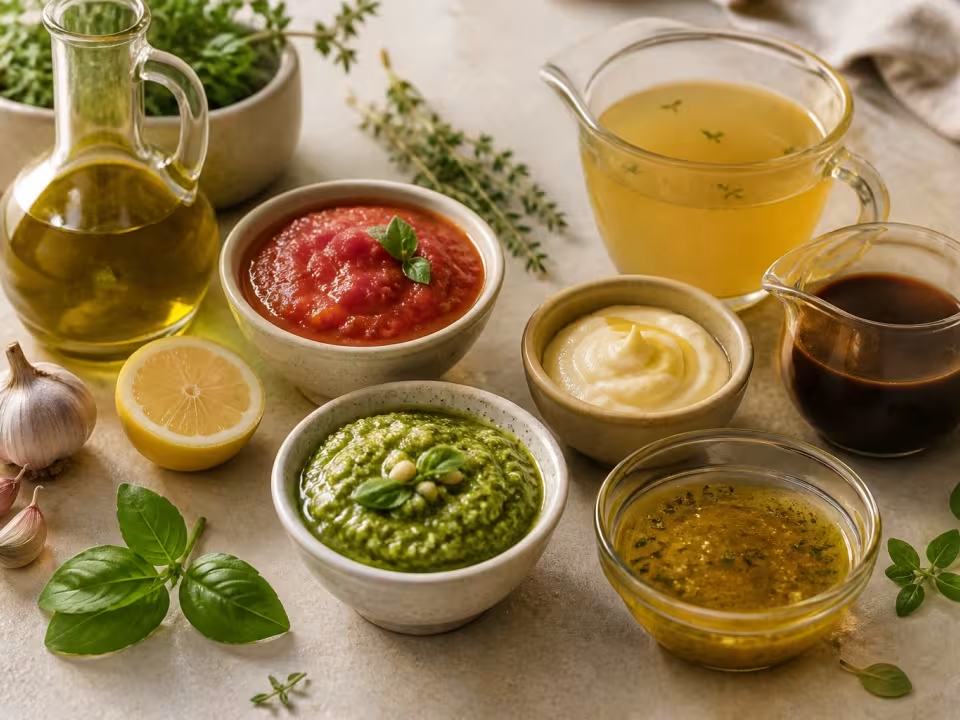
A good sauce doesn't hide a food, but complements its flavor, adds richness and creates contrast. Broths provide depth; sauces bind the components of a dish; and condiments add freshness, acidity and aroma. Mastering a few formulas allows you to improvise with discretion and correct many preparations before serving.
Broths, broths, bouillons and consommés
Although they are often used as synonyms, each preparation has a different purpose. The broth is intended for consumption alone or as a visible part of a recipe. The broth is a more concentrated base for stews and sauces. The bouillon is a short fish or seafood broth. The consommé is a flavorful and clarified broth.
White Broth
It is prepared with bones or carcasses without toasting, aromatic vegetables and cold water. It is heated slowly and kept at a very gentle boil to obtain a clean liquid. It is suitable for rice, creams, birds, soft fish and clear sauces.
- Always start with cold water to allow progressive extraction.
- Remove the foam that appears at the beginning without stirring excessively.
- Do not add too much salt: the broth can be reduced later.
Dark Broth
The bones, cuts and vegetables are toasted before adding the water. The golden hue develops intense aromas and provides color. After toasting, the juices adhered with water or wine are recovered and everything is cooked slowly.
Fish Bouillon
It is made with white fish bones and heads, celery, onion and soft herbs. A cooking time of about 20 or 25 minutes is usually sufficient; prolonging it can extract bitter flavors. Avoid viscera, gizzards and very fatty fish if you want a delicate result.
How to concentrate and clarify
To concentrate, strain the broth and reduce it uncovered on medium heat. To clarify with precision, cool it: the fat will solidify on the surface and can be easily removed. A reduced broth can be frozen in small portions to measure it.
Basic sauces to master
Tomato Sauce
Part of caramelized onion or garlic, tomato and a sufficient cooking time to evaporate excess water. If the tomato is acidic, before adding sugar check if it needs more time, a pinch of salt or a naturally sweet vegetable, like carrot.
Bechamel
The formula is approximately 40 g of butter, 40 g of flour and 500 ml of milk for a medium texture. Cook the flour with the fat for a few minutes, gradually add the milk and stir until thick. For croquettes, a higher proportion of flour is needed; for frying, a lighter sauce.
Velouté
Uses the same principle as bechamel, but substitutes milk with a clear broth. It is a versatile base for white meats, fish, vegetables and creams. The broth should have flavor, but little salt, because the sauce concentrates when cooking.
Spanish Sauce
Combines a dark broth with toasted vegetables, tomato and a thickening element. After cooking slowly, it is strained. Its intense flavor works especially well with meats, stews and long-cooked preparations.
Mayonnaise and sour cream
For a stable mayonnaise, use approximately 1 egg for 200 ml of oil, salt and an acidic ingredient. Keep the ingredients at similar temperatures and add oil gradually. The sour cream substitutes the egg for milk and is usually prepared with a ratio of about one part milk to two parts oil.
Hollandaise Sauce
It is a hot emulsion of egg yolk, butter and acid. Work with gentle heat: excessive heat will curdle the egg yolk and break the sauce. It should be served fresh and should not be stored for another day.
Traditional sauces to expand your repertoire
Alioli
The traditional version emulsifies garlic and oil in a mortar. It can also be prepared quickly by adding garlic to mayonnaise. Adjust the amount of garlic to your intended use and let it rest for a few minutes to appreciate its real intensity.
Green Sauce
It is formed with garlic, oil, flour or reduction of its own liquid, white wine, broth and parsley. It should be light and bright, not like a heavy cream. It is suitable for fish, mussels, potatoes and vegetables.
Romesco
Combines roasted tomato and garlic with endive, dried fruits, bread, oil and vinegar. The texture can be rustic or fine, but it must maintain the balance between toasting, acidity and sweetness. It accompanies vegetables, fish and meats on the grill.
Sauce of almonds and wine
Toasted almonds thicken and add depth to meat, fish or vegetable stews. Sauce of wine needs a previous reduction to evaporate alcohol and concentrate the aroma before adding broth, butter or cream.
Vinaigrettes and balanced condiments
The classic ratio is three parts oil for one part vinegar, but it is only a starting point. A strong vinegar may need more oil; lemon usually admits a lighter ratio. Salt dissolves better first in the acidic ingredient.
- Classic: olive oil, vinegar, salt and pepper.
- Mustard: add mustard, which adds flavor and helps stabilize the emulsion.
- Honey: use a small amount and balance with mustard or a live vinegar.
- Lemon: combine juice, fine zest, oil and fresh herbs.
- Yogurt: light natural yogurt with lemon, oil, salt and herbs.
Shake the condiment in a closed jar or beat it just before serving. Add it to tender leaves at the last moment to avoid losing texture.
International daily sauces
- Pesto: basil, dried fruits, cheese, garlic and oil. Do not heat it excessively; it integrates better off the heat with a little cooking water.
- Tzatziki: yogurt, peeled cucumber, garlic, lemon and herbs. Removing the water from the cucumber avoids a liquid sauce.
- Chimichurri: herbs, garlic, vinegar, oil and spices. Improves after a brief rest.
- Tahini: the sesame paste thickens when in contact with water and lemon; add the liquid gradually until you get a creamy texture.
- Teriyaki: combines soy sauce, a sweet and aromatic component. Watch the reduction because it can concentrate too much salt.
- Curry sauces: toast the spices briefly and balance with tomato, broth, coconut milk or yogurt according to the recipe.
Always check for allergens: pesto and romesco often contain dried fruits; tahini contains sesame; the regular soy sauce contains soy and, often, wheat; and many creamy sauces incorporate eggs or dairy products.
How to thicken a sauce
- Reduction: evaporates water and concentrates flavor. It is the cleanest method, but also concentrates salt.
- Roux: mixes an equal amount of fat and flour, cooked before adding the liquid.
- Flour: dissolves wheat flour or starch in cold liquid before adding it to the hot sauce.
- Chopped vegetables: onion, carrot, squash or potato add body without much fat.
- Bread and dried fruits: suitable for picadas, stews and traditional sauces.
- Emulsification: cold butter, oil or egg can give body and shine if added at controlled temperature.
Wait a few minutes before thickening again: many sauces gain body when cooled slightly.
How to correct a sauce
- Too salty: increase the amount of base without salt or add more main ingredient. Potatoes do not magically remove salt.
- Too acidic: add fat, a sweet vegetable or a small amount of sugar only after tasting.
- Too sweet: gradually add acid and salt.
- Too spicy: increase volume with neutral ingredients; dairy or coconut milk can soften certain dishes.
- With lumps: beat vigorously, strain or grind according to the type of sauce.
- Emulsified: start in another bowl with a little water, egg yolk or mustard and gradually incorporate the emulsified sauce.
- Too liquid: reduce or use a thickener compatible. Avoid adding flour directly.
- Too thick: thin gradually with water, broth, milk or the appropriate cooking liquid.
Storage and safety
Chill cooked broths and sauces quickly, transfer them to shallow containers and refrigerate without leaving them at room temperature for hours. As a domestic guideline, cooked broths and sauces usually last between three and four days in the refrigerator; if they contain fish, raw eggs, cream or other delicate ingredients, it's better to shorten the shelf life.
- Freeze compatible broths and sauces in small portions, leaving space for expansion.
- Label the container with the name and date.
- Thaw in the refrigerator or directly during cooking, never for hours on the stove.
- Reheat cooked preparations until they are warm throughout.
- Discard any sauce with an unusual odor, mold, gas, bulged packaging or unexpected texture.
Homemade mayonnaises with raw eggs require special caution: use clean and fresh eggs, keep them refrigerated, avoid cross-contamination, and consume them as soon as possible. For vulnerable people, pasteurized eggs are preferred.
A formula for improvising with discretion
Before serving, taste the sauce by considering five elements: salt, acidity, sweetness, fat and aroma. Correct only one at a time, mix and taste again. The right sauce should complement the main ingredient and leave it recognizable.