Cooking glossary: 50 culinary terms explained
Understand 50 everyday cooking terms, with clear definitions, practical steps and examples. Includes Spanish lookup terms for following Spanish recipes.
What does pochar mean? How does rebozar differ from empanar? This glossary explains 50 culinary terms, with practical methods and examples. Entries are arranged alphabetically by their English names, with the Spanish lookup term in brackets to help you follow Spanish recipes.
A
Adjust seasoning or consistency (Rectificar)
Make a final adjustment to a preparation’s flavour or consistency.
How to do it: Taste towards the end of cooking and adjust salt, acidity or thickness gradually.
In the kitchen: Adjust a sauce’s salt after reducing it, once its flavour is concentrated.
Al dente (Al dente)
A stage of cooking at which pasta offers slight resistance when bitten, without being hard or floury in the centre.
How to do it: Taste a piece before the suggested time on the packet and allow for any further cooking in sauce.
In the kitchen: Drain pasta while still slightly firm if you will finish it in its sauce.
B
Bain-marie (Baño maría)
Heat a preparation in a container placed inside another containing water, to transfer heat gently.
How to do it: Keep water out of the preparation and control the simmer as the recipe requires.
In the kitchen: Bake custard moulds in a tray of hot water.
Beat (Batir)
Move a mixture with a whisk, fork or mixer to combine ingredients or incorporate air.
How to do it: Choose intensity and duration for the task: mixing eggs is different from whipping egg whites.
In the kitchen: Beat omelette eggs until the whites and yolks are combined.
Bind or thicken (Ligar)
Give a sauce, cream or preparation cohesion or thickness.
How to do it: Use the method specified: starch, reduction, emulsification or another binding ingredient.
In the kitchen: Thicken a sauce with a little starch first dissolved in cold liquid.
Blanch or beat until pale (Blanquear)
A term with several meanings: briefly cook food, or beat eggs or yolks with sugar until lighter in colour.
How to do it: Read the context. Vegetables are usually blanched in boiling water and may then be cooled quickly.
In the kitchen: Blanch green beans before sautéing; in baking, beat yolks and sugar until pale.
Blend or finely crush (Triturar)
Reduce food to small particles or a smooth cream using a suitable utensil.
How to do it: Adjust time and liquid for the texture wanted and follow appliance instructions for hot preparations.
In the kitchen: Blend cooked vegetables with some of their stock to make a soup.
Blind bake (Cocer en blanco)
Bake a pastry base before adding its filling.
How to do it: Follow the recipe for pricking, chilling or using baking weights over parchment to prevent puffing.
In the kitchen: Pre-bake a quiche pastry case before adding the filling.
Braise (Brasear)
Cook slowly with a little liquid in a covered pot, often after browning the food.
How to do it: Maintain a gentle simmer and enough liquid; this is different from cooking directly over embers.
In the kitchen: Braise a piece of meat with vegetables and stock until tender.
Bread (Empanar)
Coat food in breadcrumbs or a similar covering before cooking.
How to do it: A common sequence is flour, egg and breadcrumbs; shake off the excess at each stage.
In the kitchen: Bread a cutlet and cook until its coating is golden and its centre cooked through.
Brown (Dorar)
Develop a toasted colour on the surface of food through heat.
How to do it: Dry the surface when appropriate and avoid overcrowding. Use a pan or the oven.
In the kitchen: Brown mushrooms in batches so they do not simply simmer in their released water.
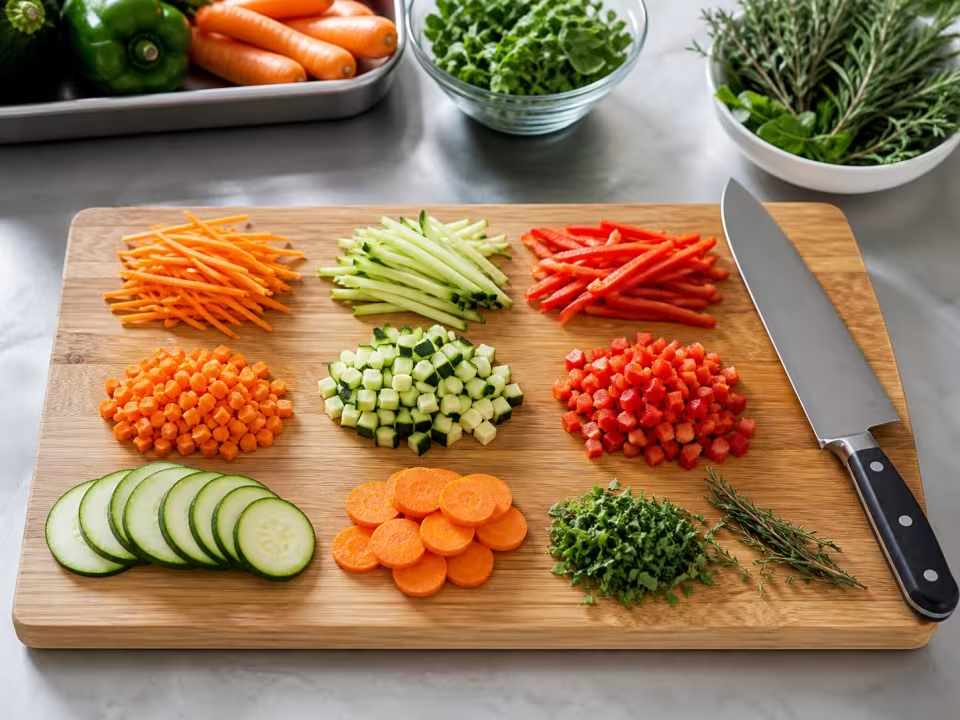
Brunoise (Brunoise)
Small, evenly sized dice, mainly used for vegetables.
How to do it: Cut slices, then strips, then similar-sized dice.
In the kitchen: Dice carrot finely for a gently cooked vegetable base.
C
Caramelise (Caramelizar)
Transform sugars through heat, developing characteristic colour and aromas.
How to do it: Control heat and colour to prevent burning. Not every browning process is caramelisation.
In the kitchen: Cook sugar for a custard caramel until amber.
Coat in batter or flour and egg (Rebozar)
Cover food with a mixture or layers that form a coating during cooking.
How to do it: Use flour and egg or a liquid batter, allowing excess to drain.
In the kitchen: Coat courgette slices before frying.
Coat with sauce (Napar)
Cover food with a layer of sauce that clings to its surface.
How to do it: Adjust the sauce consistency before pouring: it should coat rather than run like watery liquid.
In the kitchen: Coat a piece of fish with sauce as you serve it.
Confit or candy (Confitar)
Cook gently in fat; the Spanish term can also refer to preparing fruit with sugar or syrup.
How to do it: Temperature and time depend on the food and recipe. There is no single temperature for every preparation.
In the kitchen: Cook garlic gently in oil until tender.
Cook a flavour base (Sofreír)
Cook ingredients in fat to develop the flavour of a dish’s base.
How to do it: Let each ingredient reach the intended stage before adding the next; browning depends on the dish.
In the kitchen: Cook an onion, garlic and tomato base for a stew.
Cook gently in a little fat (Rehogar)
Cook ingredients with a small amount of fat, stirring to distribute heat.
How to do it: Match the heat to the recipe; this is often a moderate cooking stage before other ingredients are added.
In the kitchen: Cook vegetables in a little fat before adding stock to a rice dish.
D
Deglaze (Desglasar)
Add liquid to release browned residues stuck to the base of a cooking pan.
How to do it: Remove excess fat, add stock or water and scrape gently. Discard burnt residues.
In the kitchen: Deglaze a meat pan with stock to begin a sauce.
E
Emulsify (Emulsionar)
Disperse one liquid into another with which it does not readily mix, such as oil and water.
How to do it: Whisk while gradually adding one liquid; some ingredients help stabilise the mixture.
In the kitchen: Whisk oil and vinegar for a vinaigrette; incorporating air alone does not define an emulsion.
En papillote (Papillote)
Cook food in a closed parcel that retains moisture and aromas.
How to do it: Use suitable paper or a vessel designed for the method, seal well and open carefully because of steam.
In the kitchen: Cook fish with thinly cut vegetables in a baking-parchment parcel.
F
Flavour with aromatics (Aromatizar)
Add aroma using herbs, spices, citrus peel or other ingredients.
How to do it: Use a moderate quantity and remove whole aromatics once they have imparted enough flavour.
In the kitchen: Infuse lemon peel in milk for a dessert.
Fold (Movimientos envolventes)
Mix gently to retain air in a whipped preparation.
How to do it: Pass a spatula through the base and lift the mixture while turning the bowl, without vigorous beating.
In the kitchen: Fold whipped egg whites into batter in several additions.
G
Gratinate (Gratinar)
Brown the surface of a dish with intense heat, usually from above.
How to do it: Position it according to your oven’s instructions and watch continuously at the end.
In the kitchen: Brown cauliflower with béchamel under the grill.
J
Julienne (Juliana)
Cut into thin, elongated strips.
How to do it: Divide the ingredient into stable pieces and aim for strips of similar thickness.
In the kitchen: Slice onion into thin strips for slow cooking.
K
Knead (Amasar)
Work a mixture to distribute its ingredients and develop the structure required by the dough.
How to do it: Alternate kneading and resting when specified; avoid adding excess flour simply because dough feels sticky.
In the kitchen: Knead bread until it forms a cohesive dough with the desired elasticity.
M
Macerate (Macerar)
Leave food in contact with liquid or seasoning to exchange flavours or change texture.
How to do it: Follow the specified timing and storage; delicate fruit can soften considerably.
In the kitchen: Macerate strawberries with a little sugar and lemon juice.
Marinate (Marinar)
Leave food in an aromatic mixture before cooking or serving, according to the recipe.
How to do it: Distribute the marinade and control the time. Refrigerate raw meat and fish during marinating.
In the kitchen: Marinate chicken in yoghurt and spices before cooking; marinating does not replace cooking.
Mise en place (Mise en place)
Organise ingredients, utensils and tasks before cooking.
How to do it: Read the whole recipe, weigh ingredients and prepare the cuts you need at the start.
In the kitchen: Have vegetables cut and seasonings measured before a quick stir-fry.
P
Poach (Escalfar)
Cook food gently in liquid, avoiding a strong boil.
How to do it: Control the heat so the movement of the liquid does not break delicate pieces.
In the kitchen: Poach an egg in hot water at a very gentle simmer.
Pound (Majar)
Crush ingredients in a mortar to the desired texture.
How to do it: Work harder ingredients first, then add liquids if required.
In the kitchen: Pound garlic and parsley for a stew.
R
Reduce (Reducir)
Evaporate some water from liquid to concentrate flavour and often thicken it.
How to do it: Cook uncovered and watch the final stage to prevent sticking. Salt becomes concentrated too.
In the kitchen: Reduce stock to make a more intense sauce.
Remove excess fat (Desgrasar)
Remove some of the fat from stock, sauce or stew.
How to do it: Spoon fat from the surface or remove the layer that solidifies after refrigeration.
In the kitchen: Remove excess fat from a stock before using it in soup.
Roast (Asar)
Cook with dry heat, usually in an oven or over embers.
How to do it: Preheat when required and leave space between pieces rather than crowding them.
In the kitchen: Roast vegetables spread over a tray with a light coating of oil.
S
Sauté (Saltear)
Cook small pieces quickly with little fat and relatively high heat.
How to do it: Prepare everything first, work in batches and move ingredients to distribute browning.
In the kitchen: Sauté thinly cut vegetables to retain a firm texture.
Scald or blanch briefly (Escaldar)
Immerse food briefly in boiling liquid.
How to do it: Remove promptly and cool if you want to stop cooking; timing depends on the food and purpose.
In the kitchen: Briefly blanch tomatoes to make their skins easier to remove.
Sear (Sellar)
A common term for quickly browning the surface of a piece of food, usually meat.
How to do it: Aim for browning without burning. It does not seal pores or form a barrier that locks juices in.
In the kitchen: Brown meat before stewing to add flavour to the dish.
Season (Aderezar)
Add salt, oil, vinegar, spices or other seasonings to adjust the flavour of a dish.
How to do it: Add a little at a time, mix and taste before seasoning again.
In the kitchen: Dress a salad just before serving to keep its leaves crisp.
Season with a marinade (Adobar)
Coat food in a mixture of seasonings to flavour it before cooking.
How to do it: Spread the marinade over the whole surface and follow the resting time in the recipe, refrigerating where required.
In the kitchen: Season chicken with olive oil, paprika, garlic and oregano.
Set (Cuajar)
Make a liquid or semi-liquid preparation acquire a firmer structure.
How to do it: Apply heat or cooling according to the ingredient causing the change, and avoid taking it further than needed.
In the kitchen: Remove an omelette from the heat at the setting point specified by the recipe.
Sift (Tamizar)
Pass an ingredient through a sieve to separate lumps or particles.
How to do it: Use a suitable mesh and work with small quantities.
In the kitchen: Sift cocoa before adding it to a batter to avoid lumps.
Skim (Espumar)
Remove foam and particles that rise to the surface during cooking.
How to do it: Move a skimmer or spoon across the surface without stirring the whole pot.
In the kitchen: Skim stock during the early stages of cooking.
Steam (Cocer al vapor)
Cook in vapour generated by hot liquid, without immersing the food.
How to do it: Place food on a rack or in a basket, cover and check that the pan does not boil dry.
In the kitchen: Steam broccoli until tender with some firmness remaining.
Stew gently (Estofar)
Cook slowly in a covered vessel with the food’s juices and, if needed, added liquid.
How to do it: Keep the heat gentle and check occasionally that the stew is not drying out.
In the kitchen: Stew meat with vegetables until tender.
Sugar syrup (Almíbar)
Sugar dissolved in water, with different possible concentrations and consistencies.
How to do it: Dissolve the sugar and control cooking for the result you want; equal parts are not always used.
In the kitchen: Use a light syrup to moisten a sponge cake.
Sweat vegetables (Pochar)
In many Spanish home recipes, cook vegetables gently in a little fat to soften them without pronounced browning.
How to do it: Use gentle heat and stir; add a little water if they dry out before softening.
In the kitchen: Cook onion gently until soft and translucent.
T
Toast (Tostar)
Apply heat to develop aromas and colour and often reduce moisture.
How to do it: Watch and stir where appropriate: nuts and spices can burn quickly after toasting.
In the kitchen: Toast walnuts before adding them to a salad.
W
Warm gently or temper (Templar)
Bring a preparation to a moderate temperature; in some contexts, gradually bring two mixtures closer in temperature.
How to do it: Follow the recipe’s intended meaning and avoid sudden temperature changes with eggs or chocolate.
In the kitchen: Stir a little hot milk into yolks before combining both mixtures.
Whip or assemble (Montar)
Beat a preparation to incorporate air and increase volume; the Spanish term may also mean assembling a dish.
How to do it: Identify the intended meaning and stop beating at the required texture.
In the kitchen: Whip cold cream until it holds its shape without continuing until it separates.
Whipped egg whites (Punto de nieve)
Egg whites beaten to incorporate air and form a foam that can hold peaks.
How to do it: Use a clean, grease-free bowl; the required firmness depends on the recipe.
In the kitchen: Whip egg whites before folding them gently into a batter.
Differences worth knowing
Sweating, gentle cooking in fat and a flavour base
The meanings of pochar, rehogar and sofreír overlap by region and recipe. Pochar usually means softening vegetables without pronounced browning; rehogar describes cooking with a little fat; a sofrito builds a flavour base. Check the heat, timing and appearance requested.
Battering and breading
A rebozado can be a liquid batter or a flour-and-egg coating. Empanado includes breadcrumbs or a similar covering. The exact sequence depends on the dish.
Scalding and blanching
Both may refer to brief cooking in water. Blanquear also has other meanings, such as beating yolks with sugar until pale. Read the context first.
Beating, whipping and emulsifying
Beating is an action; whipping aims to incorporate air and increase volume; emulsifying disperses one liquid into another with which it does not readily mix. A preparation can combine more than one process.
Practise with our recipes
Explore more AceiteySal recipes.
Sources and editorial approach
Written by AceiteySal for home cooking. The terminology section of Recetario de cocina multicultural inspired the alphabetical reference format; the definitions have been rewritten and their nuances reviewed. Usage may vary by country, culinary school and recipe.
- Exploratorium: Science of Cooking, the science behind cooking.
- Exploratorium: Braising Makes a Tough Cut Tender, browning, juices and slow cooking.