The right flour for every dough: how to choose
Choose flour for bread, pizza, cakes and biscuits, understand flour types and strength, and make thoughtful substitutions.
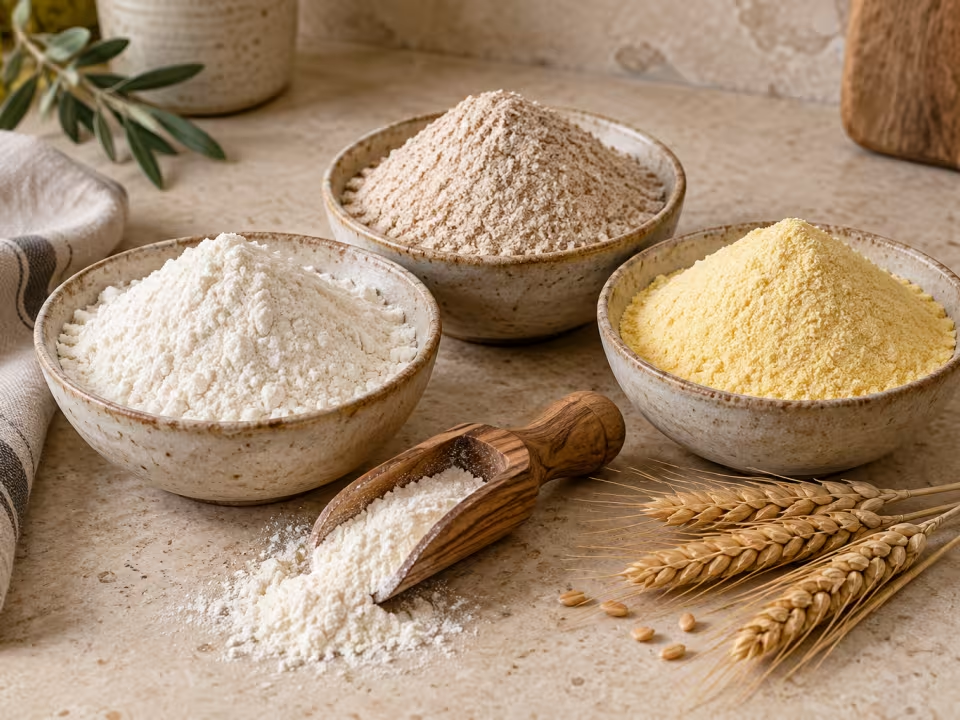
Bread dough needs to hold the bubbles produced during fermentation. A butter biscuit should break easily when you bite it. Both contain flour, but we want different results. Choosing an appropriate flour helps without making your pantry complicated.
Start with three questions: what is the flour made from, how refined is it, and how does it behave in dough? The recipe and the packet then provide the remaining clues.
What makes flours different?
Refinement and strength are different things
White wheat flour comes mainly from the centre of the grain. Wholemeal flour also retains bran and germ, adding flavour, colour and fibre. Refinement alone does not tell you whether a flour is suitable for bread or biscuits.
Strength describes its ability to form resilient dough. When wheat flour is hydrated and worked, its proteins form a gluten network. This gives elasticity and helps hold the gas produced by yeast. In shortcrust pastry, limiting gluten development helps achieve a tender, crumbly texture.
What to look for on the packet
Check the recommended use: bread, pizza, cakes or general baking. If a W value is given, it indicates strength: higher values mean stronger flour. Protein percentage is another clue, but it does not directly equal W; protein quality and the flour as a whole also matter.
Check whether raising agents have been added. Cake or pastry flour does not necessarily contain them, whereas self-raising flour does. Adding the recipe's full quantity again can change the result.
Which flour suits each preparation?
| Preparation | Look for | Keep in mind |
|---|---|---|
| Bread and yeasted dough | A breadmaking flour suited to the recipe. | Not every loaf needs very strong flour. Match it to hydration and fermentation. |
| Pizza | Pizza flour with strength suited to the process. | Short and long fermentations may need different flours. |
| Brioche and enriched dough | Strong flour appropriate to the formula. | Sugar, fat and other additions make the dough more demanding. |
| Cakes | Soft cake flour, usually without added raising agents. | Mix only as much as needed after adding flour. |
| Biscuits, alfajores and shortcrust pastry | Soft wheat flour as specified in the recipe. | Avoid prolonged kneading and allow any required rest. |
| Crêpes and pancakes | Plain flour or the flour specified in the recipe. | Check whether raising agents and resting are required. |
Remember: stronger flour is not automatically better flour. It behaves differently and is useful when it suits the preparation.
What do 000, 0000, 0 and 00 mean?
Names vary between countries. Argentina uses labels such as 000 and 0000; Italy uses 0 and 00; France uses types such as T45 and T55. These classifications relate to refinement and mineral content, under each country's own system. They are not an international scale of strength.
Argentine recipes often call for 000 in breadmaking and 0000 in pastry. This is a useful starting point, but not an exact equivalent to a particular Spanish or British flour. Italian 00 flour is not always soft either: some products are designed for pizza and fermented dough.
If you cannot find the named type, check its intended use and the manufacturer's technical information. Tenderness matters for biscuits; supporting fermentation matters for bread. The number of zeros alone cannot settle the choice.
Introducing wholemeal flour
Wholemeal brings a stronger flavour and changes liquid absorption. It may also produce a denser crumb. Replacing all the white flour without other adjustments can substantially change a recipe.
Start with a recipe designed for wholemeal flour. When experimenting with a familiar recipe, replace only part, record the result and assess the dough after resting before adding flour or liquid. Bran takes time to hydrate; freshly mixed dough does not always show its final consistency.
Other flours and starches
- Rye and spelt: contain gluten but behave differently from standard wheat flour. Use recipes that allow for this.
- Rice, maize and buckwheat: offer different flavours and textures. Despite its name, buckwheat is not wheat; these flours do not form the same gluten network.
- Chickpea and other pulse flours: bring a distinctive flavour that needs to suit the dish.
- Ground almonds: have a very different composition from wheat flour and are not a direct replacement in every dough.
- Cornflour and other starches: can thicken or change texture, but are not equivalent to whole flour. Cornflour is also different from maize flour for arepas or semolina for polenta.
For gluten-free baking, use recipes developed for that purpose. For people with coeliac disease, check labelling and prevent cross-contact: the grain's origin alone does not guarantee the finished product. Oats need particular care; do not assume that any oat flour is suitable.
Four mistakes to avoid
- Always choosing the strongest flour. Decide what texture you want first.
- Confusing cake flour with self-raising flour. Check ingredients before adding baking powder.
- Adding flour endlessly to sticky dough. Respect quantities and resting times; extra flour changes the formula.
- Changing flours without recording it. Make one adjustment at a time so you can identify what worked.
Put it into practice
Compare what we want from fermented dough, a biscuit and a cake with these AceiteySal recipes:
Read the whole recipe and weigh the flour before starting. Choose for the result you want and use the label to confirm your choice.
Further reading
- King Arthur Baking: cómo elegir harina / choosing flour
- King Arthur Baking: el gluten / understanding gluten
- King Arthur Baking: sustituir por integral / wholemeal substitutions
- Código Alimentario Argentino: capítulo IX
- Mulino Caputo: harina 00 Superiore / Superiore 00 flour
- Celiac Disease Foundation: alimentos sin gluten / gluten-free foods