Aubergine
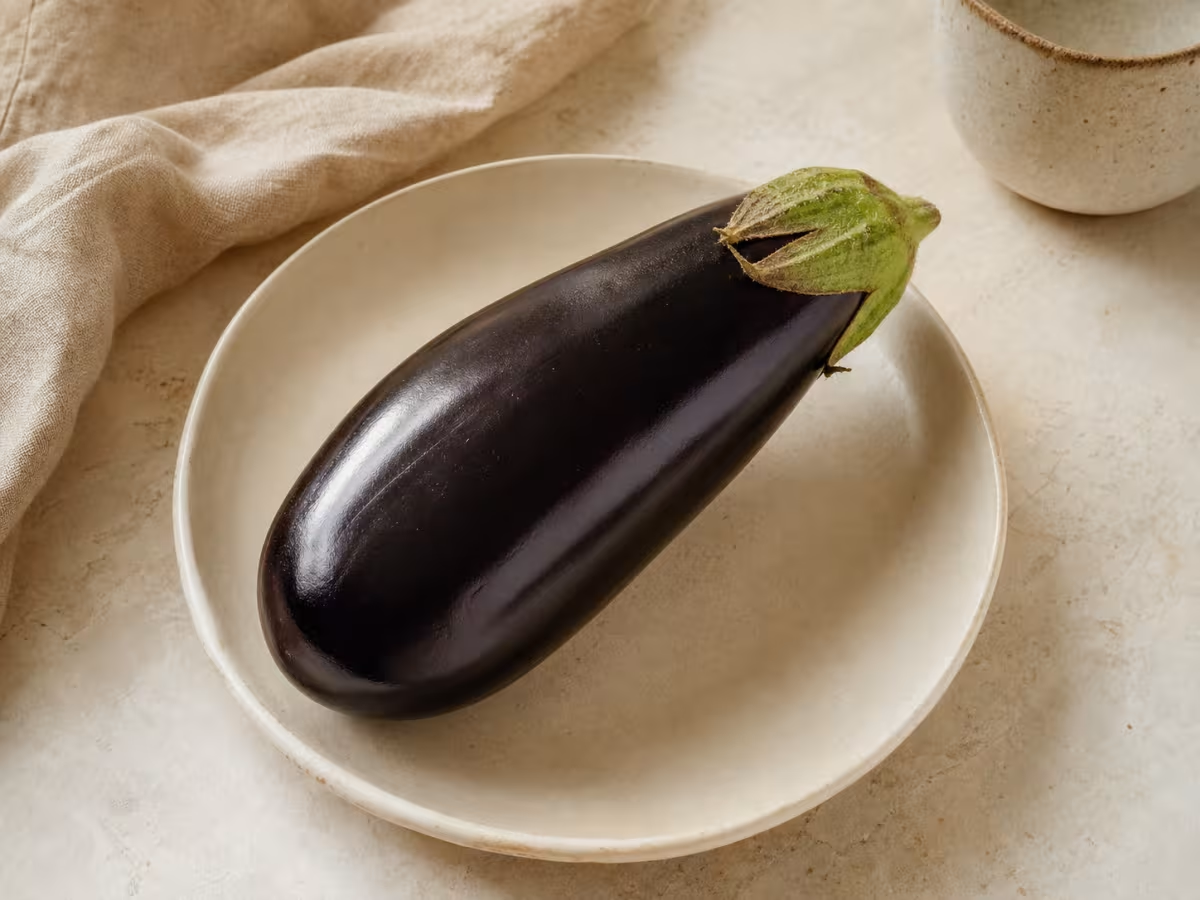
Mild aubergine with spongy flesh that softens when cooked. Use it roasted, stuffed, in vegetable stews or blended into dips.
What it offers and why to use it
Fresh or roasted. Widely available commercially; summer is its typical natural season, with regional and protected-crop variations.
A flavour profile that changes with maturity and becomes sweeter and more concentrated when roasted or fried.
From shopping to cooking
Choose
When buying aubergine, look for firm pieces of uniform colour, healthy skin and no bruises, deep wrinkles, mould or watery spots.
Store
Store whole and dry in the vegetable drawer; wash only just before using. Once cut, refrigerate well covered and consume within a few days.
Prepare
Wash, remove the stalk and leave sound skin on. Dice for vegetable stews; halve lengthways for stuffing and cook until tender. Measure the oil before adding it: aubergine absorbs it readily.
How to make the most of it
Good pairings
Pairs well with olive oil, garlic, onion, tomatoes, cheese, eggs, cereals, pulses and fresh herbs.
How to substitute it
In vegetable stews or stir-fries, try courgette: it releases more water and cooks faster, so add it later. For a stuffed vegetable, use a large courgette half with its centre removed. Replacing aubergine changes baba ganoush; choose a different vegetable dip.
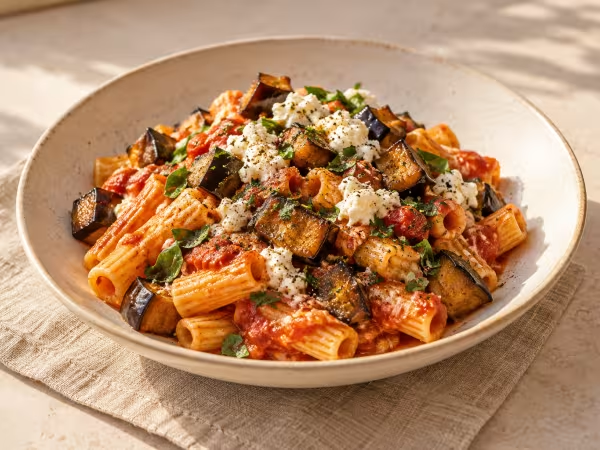
Recipes with aubergine



Is any information missing? You can report a nutrition or practical correction.
Suggest a correction →