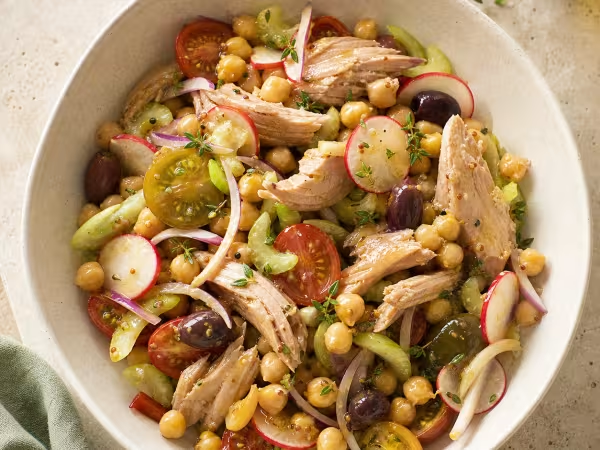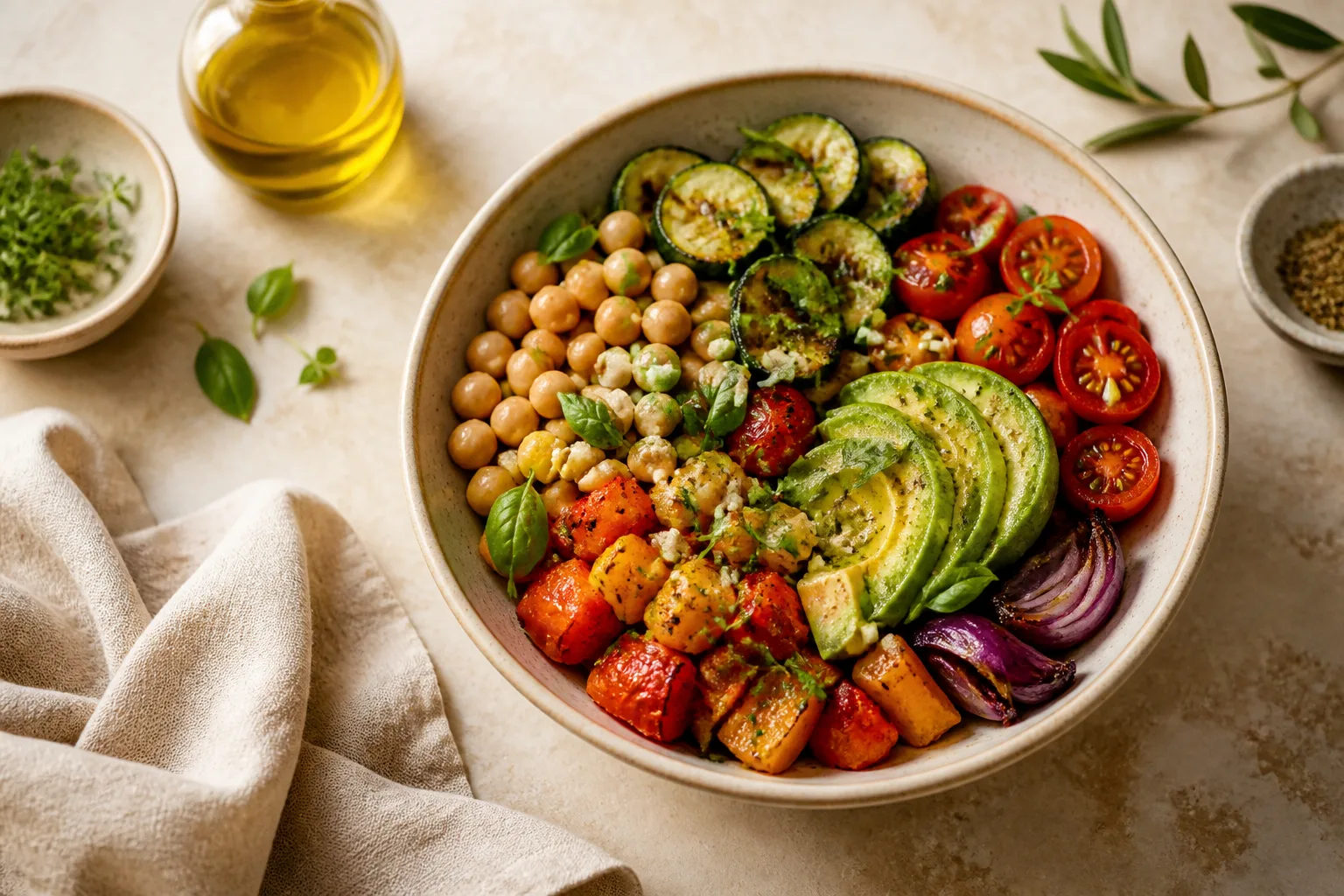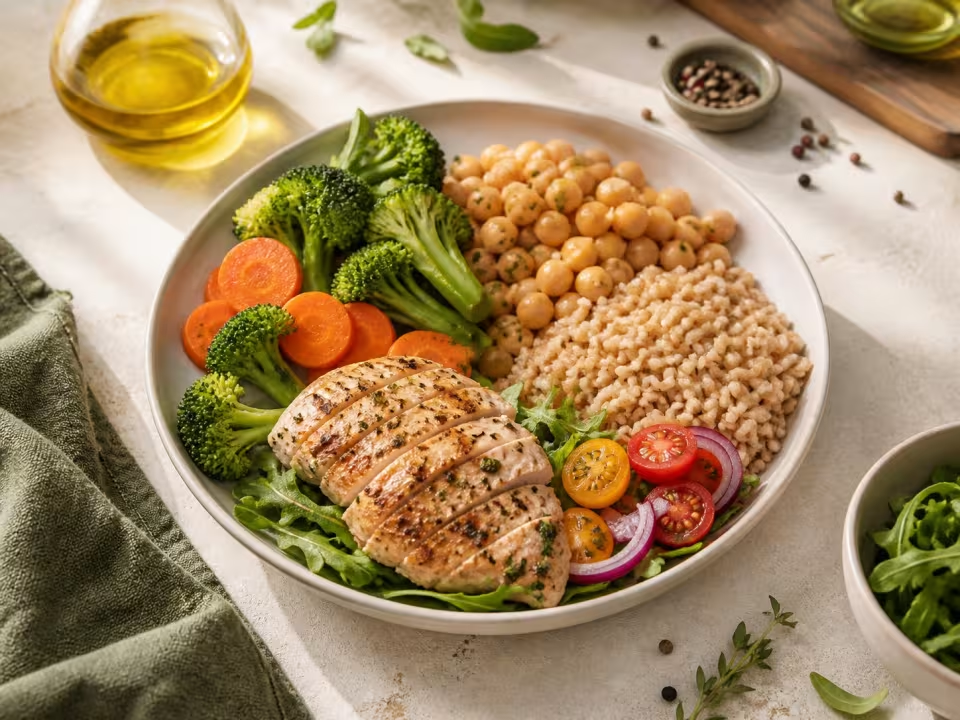
It doesn't have to be necessary to weigh every food to build a complete meal. A visual reference allows you to adapt the plate to hunger, age, activity, and the habits of each person.
A Visual Guide, Not a Strict Rule
- Approximately half: a variety of vegetables and fruits. Fruit can complete the meal.
- A quarter: protein-rich foods such as legumes, fish, eggs, poultry, tofu, or meat.
- A quarter: potatoes, bread, rice, pasta, or other grains, preferably whole grains most of the time.
- To season and cook: extra virgin olive oil, in addition to water as the usual drink.
How to Apply It in Real Life
A stew, a complete salad, or a bowl of food can also follow this logic. What's important is the global proportion, not that the foods are separated. If a meal is short on vegetables, it can be compensated with a side dish or fruit for dessert.
The balance is built throughout the day and the week; a single meal does not define the quality of the diet.
Adapt It to Your Needs
Needs change with age, level of activity, pregnancy, diseases, or sports goals. In a clinical situation, adaptation should be made by a healthcare professional.